Keep-It Step 6 · 2026–2027 Edition
Care costs are the biggest threat to a nest egg. Here's how to plan before you need it.
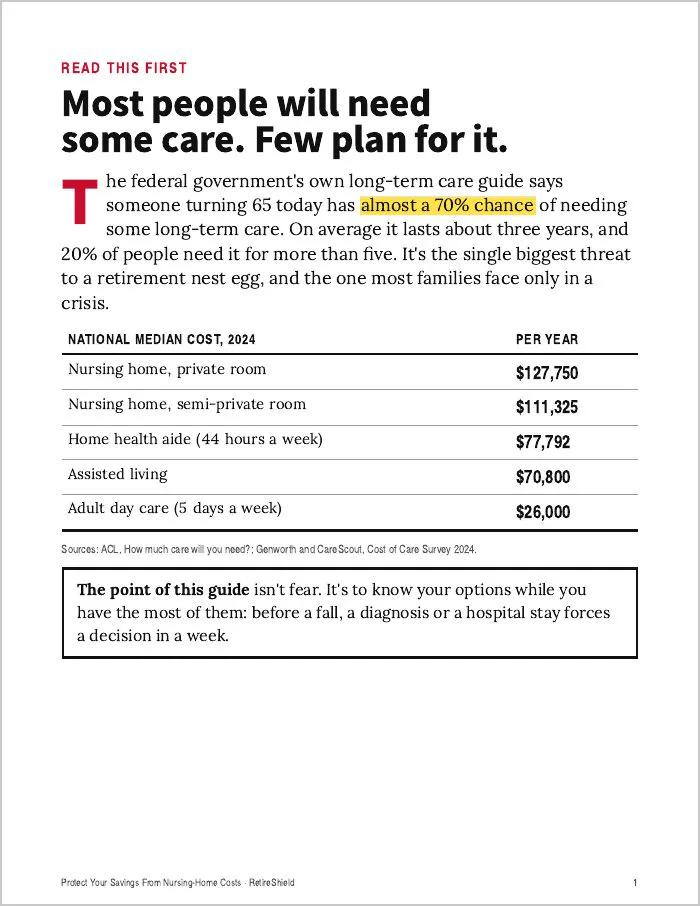
Someone turning 65 today has almost a 70% chance of needing some long-term care, the federal government's own guide says. Medicare won't pay for most of it. This guide shows what care costs, who pays, and what to do while you have the most options.
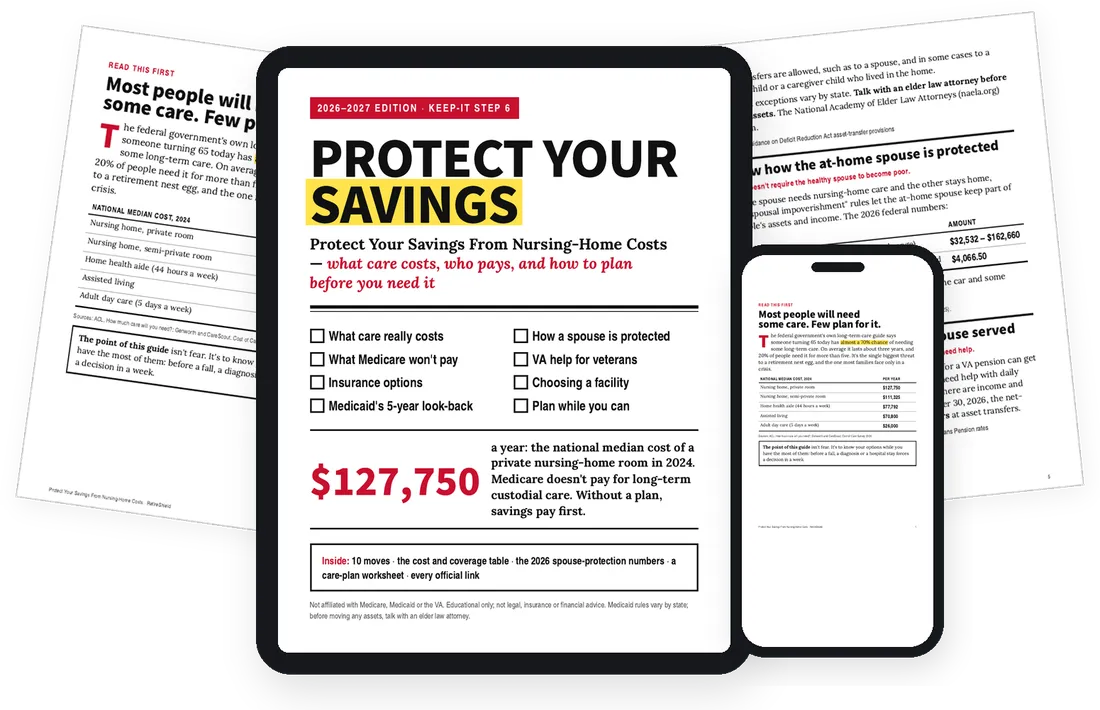

Sound familiar?
Most families face care costs only in a crisis.
Medicare doesn't pay for long-term custodial care, the help with bathing, dressing and eating. Without a plan, savings pay first. A fall, a diagnosis or a hospital stay can force a decision in a week.
- Assumed Medicare would pay for a nursing home
- Thinking of giving the house to the kids
- Worried about your spouse if one of you needs care
- A parent who may need a facility soon
What you get
Ten moves to plan before a fall or a diagnosis forces a decision.
- What Medicare pays for nursing care, and what it won't
- The four ways care gets paid for, side by side
- Long-term care and hybrid insurance, while you can still qualify
- Medicaid's 5-year look-back before you give anything away
- How the at-home spouse is protected, with the 2026 numbers
- VA Aid and Attendance for wartime veterans and surviving spouses
- Choosing a facility by star ratings, inspections and staffing
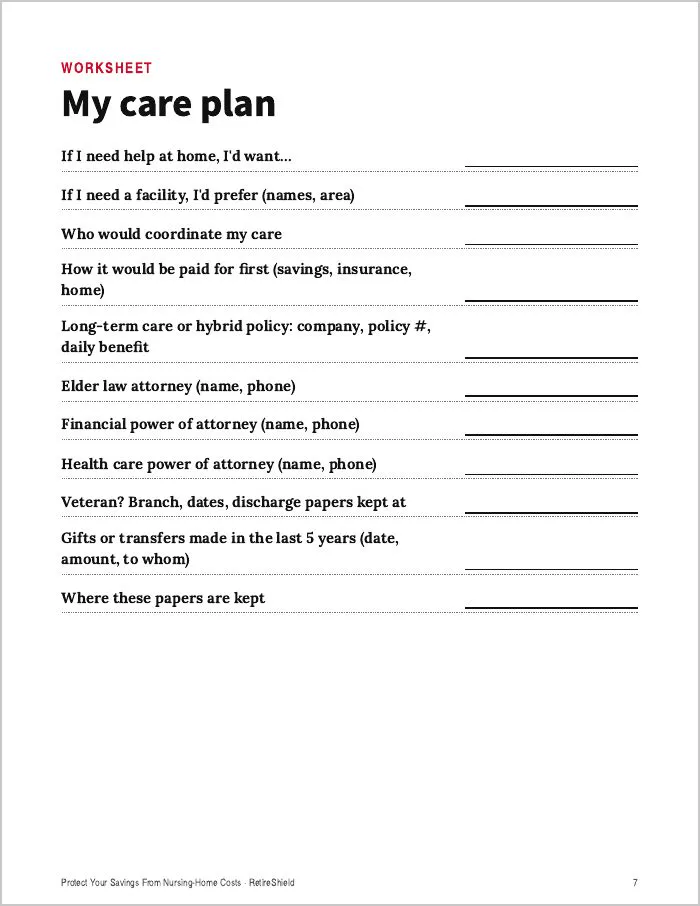
- A simple care plan you write with your family

What's inside
What's in the guide.
What care really costs
The 2024 national median cost of five kinds of care.
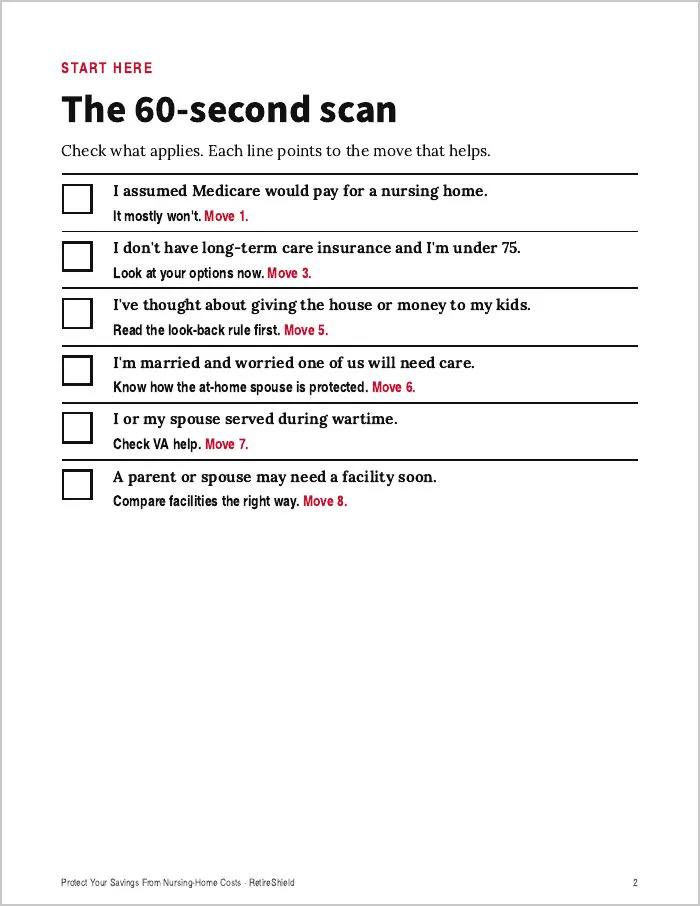
The 60-second scan
Tick what applies. Each line points to the move that helps.
Who pays, and how to plan
Medicare, insurance, Medicaid, the VA, and your house.
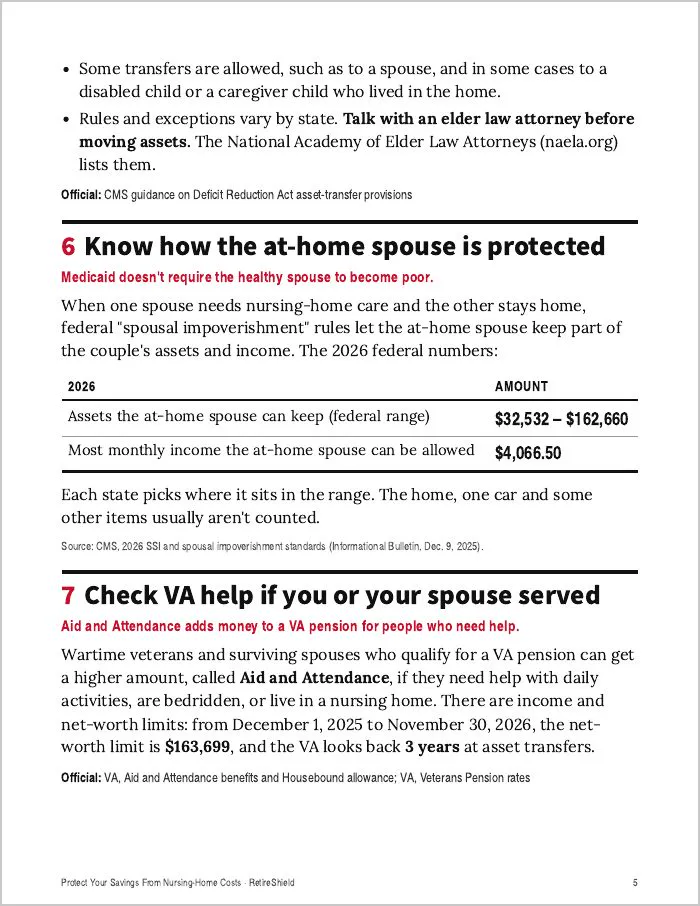
How a spouse is protected
What the at-home spouse can keep under federal rules.
My care plan
Where you'd want care, who would help, how it's paid for, who to call.
Large-print and audio editions
The same guide in big type, and read aloud (about 10 minutes). Listen on any phone, tablet or computer.
Look inside
Real pages from the guide.
How it works
Protect Your Savings From Nursing-Home Costs
Card, Apple Pay or PayPal · secure checkout
Instant download, large print and audio included, 30-day money-back promise.
PROMISE
Read it. Use it. If it isn't for you, get every penny back.
Email us within 30 days for a full refund. You keep the files.
Questions
Should I put the house in my kids' names?
Read the look-back rule first. Gifts made in the five years before applying for Medicaid nursing-home coverage can trigger months when Medicaid won't pay. Rules vary by state, so the guide says to talk with an elder law attorney before moving any assets.
Does the healthy spouse lose everything?
No. Federal rules let the at-home spouse keep part of the couple's assets and income. In 2026 the federal range for assets is $32,532 to $162,660, and each state picks where it sits in that range.
When do I get it?
Immediately. The download appears on your screen the moment you pay, and a copy is emailed to you at once.
Is this a subscription?
No. It's one payment. There is nothing recurring and nothing to cancel.
Is it easy to read?
Yes. Plain English, short sections, and large-print and audio editions are included. It opens on any phone, tablet or computer, and prints cleanly.
What if it's not for me?
Email us within 30 days for a full refund. Keep the files.
RetireShield is independent and is not affiliated with, endorsed by, or connected to Medicare, Medicaid, the VA or any government agency. This product provides educational information, not legal, insurance, financial or tax advice. Medicaid rules vary by state.

Plan for care while you have choices. $27.
Instant download, large print and audio included, 30-day money-back promise.
Get the guide — $27